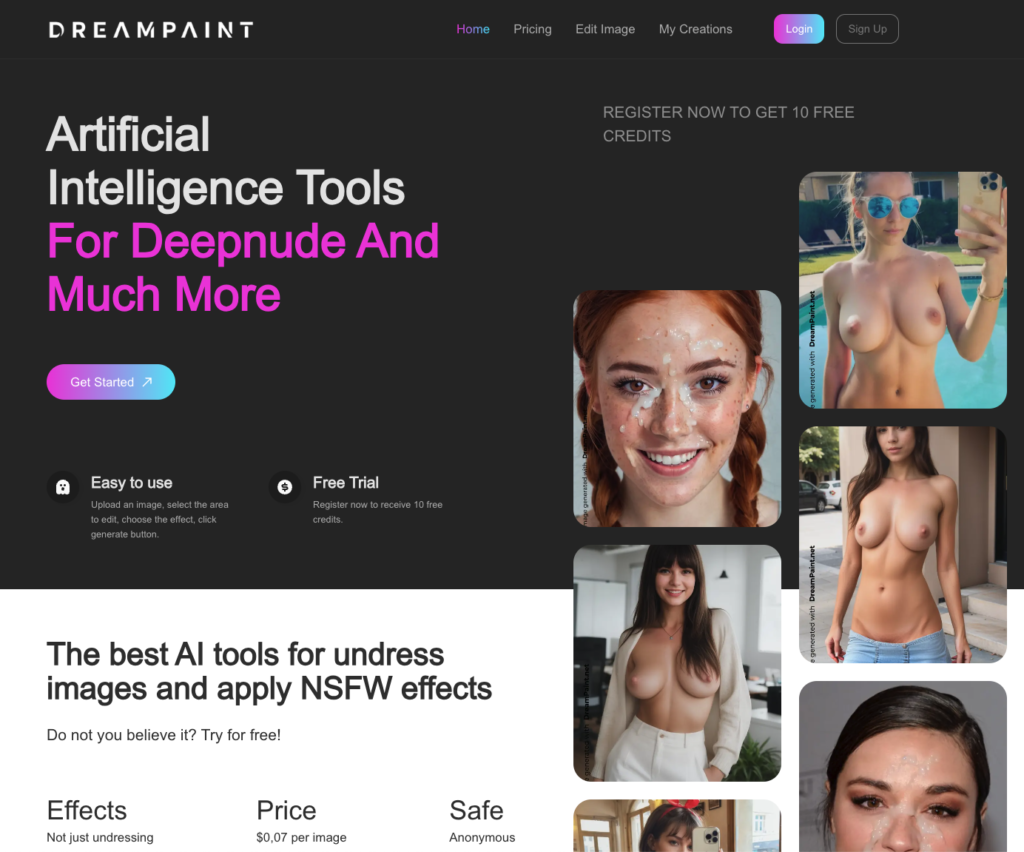
We live in a world where desire begins with a swipe. A face appears, a judgment forms in a fraction of a second, and the next candidate arrives before the first impression has cooled. Technology has spent a decade reshaping how we discover attraction. AI undress apps are becoming a new category of image-editing technology, giving users more control over how familiar images can be transformed and explored.
But discovery is only the first step. The deeper change is happening now, in what comes after: the transformation of attraction itself.
AI undressing apps have entered that territory, and they are doing something far more interesting than the novelty clips suggest. They are changing the relationship between the viewer and the image. What used to be a passive encounter — scroll, look, move on — has become an act of creation. And the most powerful tools in this new space are not the ones that invent from scratch. They are the ones that reveal what was already there.
AI Undress App: The Difference Between Inventing and Revealing
A text-to-image generator starts with nothing but a description. Type “woman, long hair, lace” and the machine consults its statistical memory, assembling a composite face out of thousands of strangers. The result can be technically impressive. It can even be beautiful. But it carries no history, no attachment, and no memory of why you chose it.
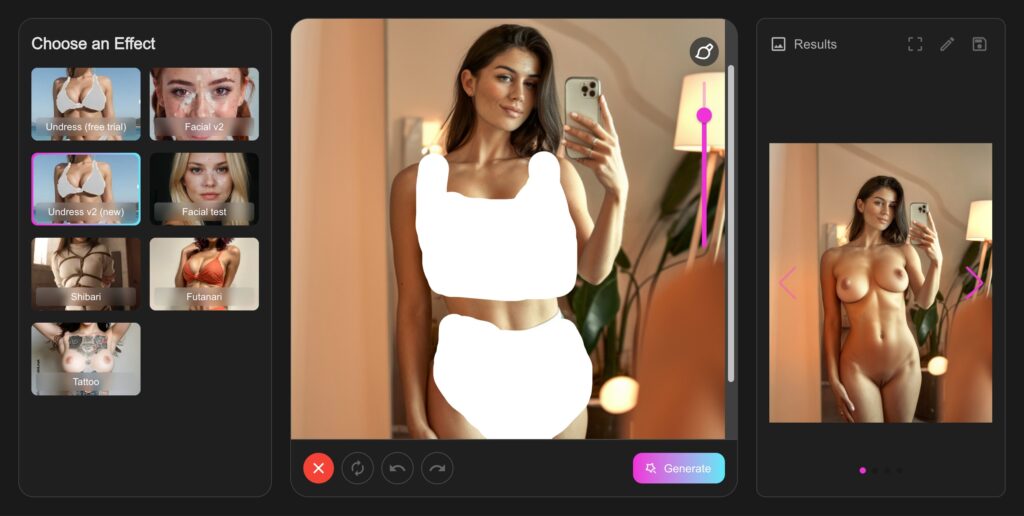
An image editor begins somewhere entirely different. It starts with a photo you already possess. A face you already care about. A moment you already wanted to keep. The AI that runs Dreampaint does not need to guess what you find attractive, because the evidence is sitting in the file. The face you uploaded is the face you chose. The tool’s entire job is to show you what that specific image could become when the layers you imagined are peeled back.
That is a completely different emotional register. One path hands you a stranger and asks you to fall in love with it. The other takes someone you already wanted and shows you a version of them you have only pictured.
Why a Familiar Face Lands Harder
The brain is wired to respond more intensely to known faces. Recognition activates deeper pathways than novelty ever can. When the same features appear across multiple versions — the same eyes, the same curve of a jawline, the same particular way light falls across a cheekbone — the mind registers continuity, and continuity builds attachment.
This is the mechanism behind why edited images outperform generated ones. A generated nude is a new entity every time. It has no relationship to anything you have seen before, so it leaves no lasting impression. An edited image, by contrast, carries history. It is the same person from the photo you kept, now placed in a scenario you have pictured for months. The fantasy does not feel borrowed. It feels personal, because the face is familiar.
Dreampaint solves the problem every text-to-image tool stumbles on: it never loses you. The uploaded photo carries the identity, and every effect — Undress, Breast Release, Full Naked, Cum on Face, the entire effect library — applies changes around that identity rather than replacing it. The face you recognize is still there in every frame, and that recognition is what turns a transformation into a connection. This is where an AI undress app differs from a conventional text-to-image generator: the starting image already carries the identity and visual details the user selected.
The New Creative Permission
There is a quieter shift happening beneath the surface. AI editing is giving ordinary users a permission they never had before: the freedom to direct.
Traditional adult content offers one scenario, filmed one way, shaped by someone else’s choices. You either accept it or you search again. AI editing hands the camera to you. You pick the base image. You decide which effect matches the mood you are in. You set the pace at which the transformation unfolds.
That changes the psychological relationship to the content entirely. You are not consuming a stranger’s fantasy anymore. You are composing your own. The platform supplies the tools, but the vision belongs to you. This is why users report that edited content feels more satisfying than anything a generic generator can produce — it is their taste, their choice, their subject, from the first frame to the last.
Exploration becomes part of the pleasure. Instead of settling for the closest match a search bar can find, you can run an image through several effects in a single sitting, compare the outcomes, and keep the version that best fits the picture in your head. The tool does not argue. It simply offers another possibility. An AI undress app also changes how users interact with visual content, turning a familiar image into a starting point for a more personalized editing experience.
From a Still to a Story
The most recent leap in this space is the move from still images to short moving sequences. A photograph captures a moment. A clip creates a world.
Dreampaint’s video effects take the uploaded base image and turn it into a five-to-seven-second sequence where the action actually occurs. A Blowbang effect transforms a portrait into an explicit moving scene. A Glory Hole sequence places the same familiar face into an entirely new context. The frames stay coherent, the identity stays anchored, and the result feels less like an image and more like a memory — something that happened rather than something that was staged. An AI undress app can extend that editing experience from a single image into short, consistent visual sequences.
This opens a door that static images never could. Users can now build short narrative arcs from a single source photo. A clothed selfie becomes a series of escalating clips, each one a step deeper into the fantasy. The character stays the same across every frame, which lets the viewer develop a familiarity that a random generated scene can never provide.
Privacy: The Unseen Fourth Layer
A fantasy only works when it feels safe. And in the digital age, safety has two components: what happens to your files, and what happens to your money.
Dreampaint deletes every uploaded image automatically after 48 hours, and the generated outputs go with it. Nothing accumulates. Nothing is archived. No server holds a permanent library of your private exploration.
Payments follow the same commitment to anonymity. Supporting Solana, Tron, and Litecoin through wallets like Exodus means no bank statement line, no billing address, and no name connecting your identity to your desires. The transaction settles on a public ledger without a name attached, which is exactly how fantasy should behave — felt, witnessed, and then gone.
The Price of Imagination
Personalization also has to stay affordable. Dreampaint’s credit system keeps every transformation transparent and predictable. A standard image edit costs under a cent per result. Video effects run on a fixed schedule — 11 credits for Breast Release, 13 for Blowjob Cheek, 14 for Full Naked, 15 for a complete Blowbang sequence.
The tiers fit every level of curiosity. The Basic package offers 100 credits for $29 (200 when paid in crypto). The Premium package delivers 300 credits for $39 (400 in crypto). And the Platinum package gives 1,000 credits for $69, boosted to 1,100 for crypto users. There are no renewal traps, no hidden token math, and no second-month surprises. The price you see is the price you pay.
Final Thoughts
An AI undress app represents this shift from generating a random image to transforming an image that already has meaning for the user. Behind every pixel lies a possibility. The phrase sounds like marketing, but it is closer to the truth of what AI editing has unlocked.
Text-to-image tools were the opening act. They showed that machines could create. But the main event is image editing, because it does something far more intimate: it lets machines reveal. The face you keep in your gallery can become the face in your fantasies. The scenario you have pictured can be rendered with the features you already admire, rather than a stranger’s approximation of them.
Dreampaint sits at the center of that shift. One base photo, one effect, one transformation that preserves the identity you chose while showing you what you imagined. That is not a novelty. That is the future of fantasy — and it looks exactly like the person you were always looking at.